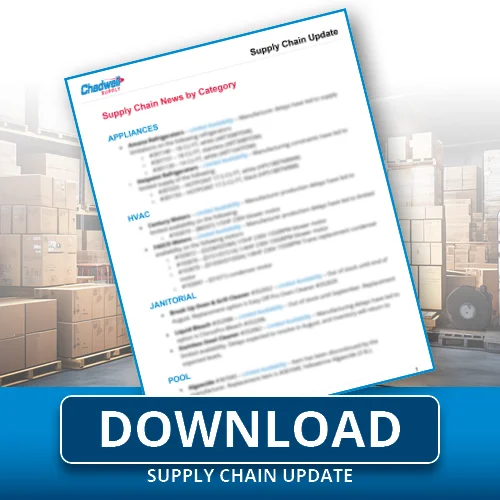

Supply Chain Updates for Multifamily
October 2026
Updated October 13, 2026



The Hidden Cost of Moving Inventory
Moving inventory is a necessary part of a strong supply chain. With products positioned across distribution centers and branches, transfers help respond to changing customer needs and get products where they’re needed most.
But every time inventory moves, there is a cost—and it goes well beyond transportation.
A transfer requires products to be pulled, staged, packaged, loaded, transported, unloaded, received, and put away. Each additional touch creates the potential for delays, damage, or inventory discrepancies.
That’s why an effective supply chain isn't simply about moving inventory efficiently. It's about being intentional with every step in the process.
Better Forecasting, Better Availability
Historical demand provides an important foundation for determining where inventory should be positioned, but customer needs can change quickly.
A new property, major renovation, student housing turn, large project, or new customer agreement can create demand that historical purchasing patterns don't anticipate.
When customers share information about upcoming projects and anticipated product needs, Chadwell Supply can work with supplier partners and internal teams to plan, adjust forecasts, and position inventory closer to where it will ultimately be used.
Learning From Inventory Movement
Transfers will always play an important role in the supply chain. They help respond to unexpected demand, support locations experiencing shortages, and make better use of inventory already available within the network.
When the same products are repeatedly moving to the same market, it can signal a change in customer demand, seasonal purchasing patterns, new business, or an opportunity to adjust local stocking levels.
Understanding these patterns helps us anticipate customer needs and position the right products in the right places to meet demand.
Right Product. Right Place. First Time.
Every time Chadwell Supply can anticipate demand and position products correctly before they're needed, we can reduce handling, transportation, and expedited freight while creating a more efficient and responsive supply chain.
Achieving that requires collaboration throughout the supply chain—from our customers communicating upcoming needs to our teams forecasting demand and our supplier partners helping maintain dependable product availability.
A great supply chain is measured by how effectively it gets the right product, in the right quantity, to the right place—when the customer needs it.
Work With a Supplier Focused on the Full Supply Chain
From reliable product availability to open communication and shared planning, strong partnerships help support the work behind every customer experience.